Why Eating Slowly Alone Doesn't Reduce Overeating If You're Still Distracted
Eating more slowly is common advice for reducing overeating, but slowing down the pace of a meal while still scrolling a phone or watching a show often doesn’t work, because the fullness signal that pace is supposed to help with actually depends on attention, not speed alone.

Why the Fullness Signal Depends on Attention, Not Just Pace
The mechanism: the brains-registration-of-satiety-relies-on-consciously-noticing-the-sensory-experience-of-eating-not-simply-on-the-amount-of-elapsed-time (the brain’s registration of fullness relying heavily on consciously noticing the sensory experience of a meal — taste, texture, the visual plate — not simply on how much elapsed time has passed while chewing, per the mindful-eating-beginners-guide logic — the brains-registration-of-fullness-relying-heavily-on-consciously-noticing-the-sensory-experience-of-a-meal-not-simply-on-how-much-elapsed-time-has-passed-while-chewing), and the reframe (slow eating helping mainly because it usually comes paired with attention, not because slowness itself is the active ingredient)).

Why Slow Eating While Distracted Still Overrides the Signal
The gap: the screen-or-conversation-competing-for-attention-can-fully-suppress-satiety-awareness-even-when-the-physical-eating-pace-is-genuinely-slow (a screen or an engaging conversation competing for attention being able to fully suppress conscious satiety awareness even when the physical eating pace is genuinely unhurried, per the screen-free-dinner-experiment logic — the screen-or-engaging-conversation-competing-for-attention-being-able-to-fully-suppress-conscious-satiety-awareness-even-when-the-physical-eating-pace-is-genuinely-unhurried), and the frame (a slow, distracted meal still being able to end in overeating, since the missing ingredient was attention, not speed)).
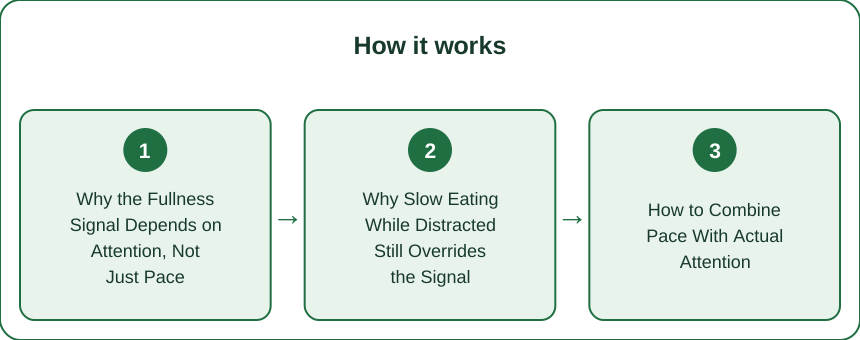
How to Combine Pace With Actual Attention
The practical fix: the remove-the-primary-distraction-source-and-pause-once-mid-meal-to-consciously-check-in-with-hunger-level (removing the primary distraction source, typically the phone or screen, for the duration of the meal, and pausing once partway through specifically to consciously check in with hunger level, combining pace with genuine attention rather than relying on pace alone, per the hunger-fullness-scale-guide logic — the removing-the-primary-distraction-source-for-the-duration-of-the-meal-and-pausing-once-partway-through-to-consciously-check-in-with-hunger-level), and the frame (attention, deliberately reintroduced, being the actual missing piece that slow eating alone was never going to supply).
The brain’s registration of fullness relies heavily on consciously noticing the sensory experience of a meal, not simply on how much elapsed time has passed while chewing, which is why a screen or engaging conversation competing for attention can fully suppress that satiety awareness even when the physical eating pace is genuinely unhurried. Removing the primary distraction source for the duration of a meal and pausing once partway through to consciously check in with hunger level combines pace with the genuine attention that slow eating alone was never actually going to supply.
Keep Reading
This article is for general informational purposes only and is not medical advice. Always consult a qualified health professional for guidance specific to you.