Why 'Just Eat Slower' Doesn't Work for Mindful Eating If You're Still Distracted
Quick Answer: Eating slowly only improves satiety awareness and reduces overeating when it’s paired with actual attention to the meal — eating slowly while scrolling a phone or watching TV removes the attentional component that makes mindful eating work in the first place, which is why ‘just slow down’ alone often doesn’t produce the promised results.
Slow eating advice gets repeated constantly, but the research behind mindful eating points to attention, not pace alone, as the actual active ingredient.

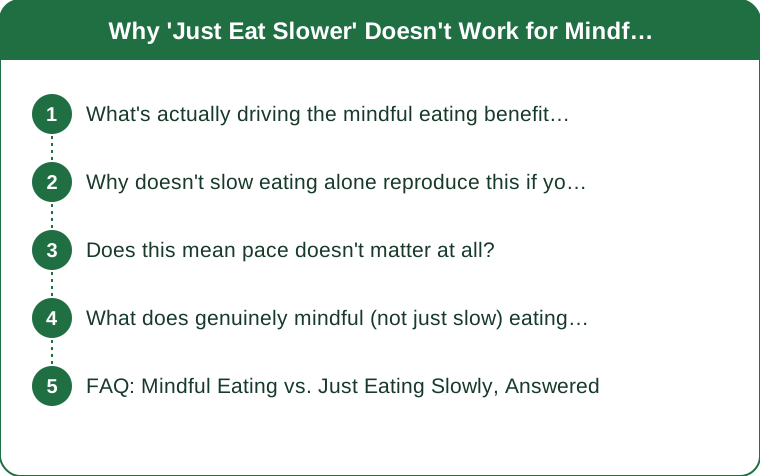
What’s actually driving the mindful eating benefit in research?
Studies on mindful eating point to sustained attention to hunger and fullness cues, and to the sensory experience of eating, as the primary mechanism behind improved satiety recognition and reduced overeating — not eating speed as an isolated variable.
Why doesn’t slow eating alone reproduce this if you’re distracted?
Distraction (screens, work, scrolling) competes for the same attentional resources needed to actually notice fullness cues, regardless of how slowly you’re physically chewing. You can eat slowly while still being cognitively ‘checked out’ from the meal itself.

Does this mean pace doesn’t matter at all?
Pace still matters somewhat — eating too quickly can outrun the roughly 20-minute lag between stomach fullness and the brain registering satiety signals, regardless of attention level. But pace without attention is an incomplete version of the actual mechanism.
What does genuinely mindful (not just slow) eating look like in practice?
Removing screens and other distractions during meals, and periodically checking in on hunger and fullness levels during the meal — not just eating slowly on autopilot — combines both the pace and attention components that the research actually supports.
FAQ: Mindful Eating vs. Just Eating Slowly, Answered
Can I mindfully eat while having a conversation with someone?
Yes — conversation doesn’t compete for attention the same way passive screen consumption does, and social eating can still involve genuine presence with the meal.
How long does it take to build this attention habit?
Most people notice improved awareness within a few consistently distraction-free meals per week, though full habit formation takes longer.
Does mindful eating work for weight loss specifically, or just satisfaction?
Both are supported in research, though the weight effect is generally modest and works best alongside other dietary strategies, not as a standalone solution.
TL;DR:
- Sustained attention to hunger and fullness cues, not just eating pace, drives mindful eating’s benefits
- Screen distraction removes the attentional component even if you’re eating slowly
- Pace still matters somewhat, given the lag between stomach fullness and brain satiety signals
- Removing distractions and checking in on fullness combines both parts of the actual mechanism
Keep Reading
This article is for general informational purposes only and is not medical advice. Always consult a qualified health professional for guidance specific to you.