Why 'Just Eat Slower' Doesn't Work If You're Still Distracted
Quick Answer: Eating more slowly only reduces overeating if attention is also on the food — slow eating while scrolling a phone or watching TV doesn’t give your brain the sensory feedback it needs to register fullness, which is why ‘just eat slower’ advice fails for people who slow down but stay distracted.
You’ve tried counting chews, putting your fork down between bites, setting a timer — and still finish the plate feeling like you barely tasted it. The pace changed, but if your attention never left the screen, the part of mindful eating that actually matters never happened.

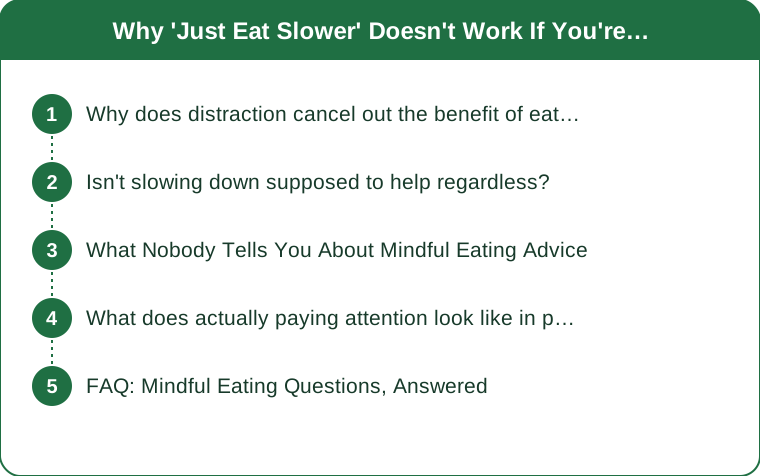
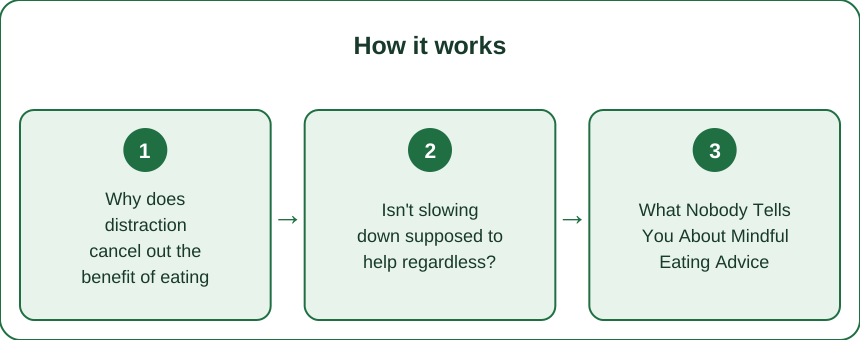
Why does distraction cancel out the benefit of eating slowly?
Fullness signals depend partly on sensory registration — actually noticing taste, texture, and the visual experience of the food as you eat it. Distracted eating, even done slowly, blunts this registration because attention is elsewhere, which is why studies on distracted eating (TV, phone use) consistently show higher intake regardless of eating pace.
Isn’t slowing down supposed to help regardless?
Slowing down helps mainly by giving your body more time to release the hormones that signal fullness (a process that takes roughly 15-20 minutes). But if you’re not actually attending to the eating experience during that slower pace, you also don’t build the sensory satisfaction that helps you feel satisfied with less food — you get partial benefit from timing but miss the bigger psychological piece.

What Nobody Tells You About Mindful Eating Advice
The chewing-count and put-your-fork-down tips are the easy 20% of mindful eating — attention is the harder 80% that actually drives results. Most mindful eating advice focuses on mechanical changes (chew more, pause more) because they’re easy to instruct, but the research on mindful eating’s actual effectiveness centers on attention and sensory engagement, which is much harder to cue with a simple tip.
What does actually paying attention look like in practice?
No screens during meals is the single highest-leverage change — not because phones are inherently bad, but because they redirect the attention that mindful eating depends on. Beyond that, briefly noticing the food’s appearance, smell, and first few bites’ flavor (rather than the whole meal) is enough to meaningfully shift the experience without turning every meal into a formal exercise.
FAQ: Mindful Eating Questions, Answered
Do you have to be fully mindful for every single meal?
No — even a few genuinely attentive meals a week can build the habit and awareness that carries over into other meals.
Does mindful eating mean eating less?
Not directly — it’s about eating with more awareness, which often leads to eating an amount that better matches actual hunger and fullness, sometimes more and sometimes less than habit-driven eating.
Is eating while working really that different from eating while watching TV?
Both count as distracted eating and show similar effects on intake and satisfaction in research, despite feeling like different situations.
TL;DR:
- Eating slowly without attention misses the sensory registration that actually reduces overeating
- Distracted eating (TV, phone) increases intake regardless of pace
- Attention, not just speed, is the harder but more important half of mindful eating
- No screens during meals is the single highest-leverage change most people can make
If slow eating hasn’t worked for you, the missing piece probably isn’t pace — it’s where your attention actually was.
Keep Reading
This article is for general informational purposes only and is not medical advice. Always consult a qualified health professional for guidance specific to you.