The Screen-Free Dinner: A One-Week Experiment in Tasting Your Food
Quick Answer: Eating without screens measurably reduces how much you eat and increases how satisfied you feel, because attention is part of how the brain registers a meal. Try it for seven dinners, phones stacked in another room. Expect awkwardness on days 1–2, food tasting noticeably better by day 3–4, and a genuine table culture by the end of the week.
Here’s an experiment requiring no equipment, costing nothing, and mildly terrifying to modern households: one week of dinners without screens.
The attention research predicts specific changes — more taste, better fullness reading, actual conversation. The week confirms them faster than most people expect.

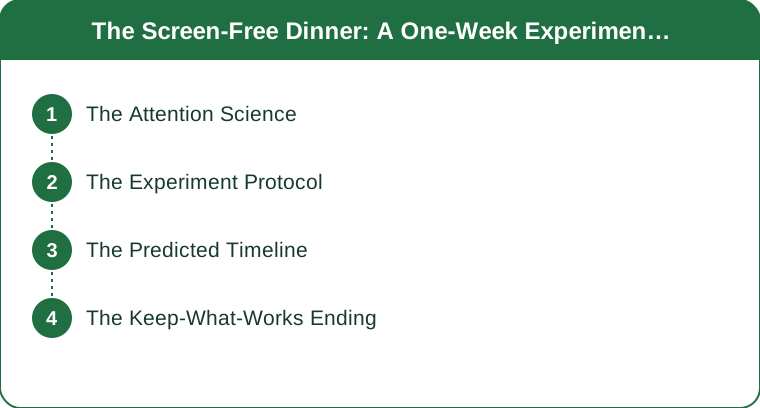
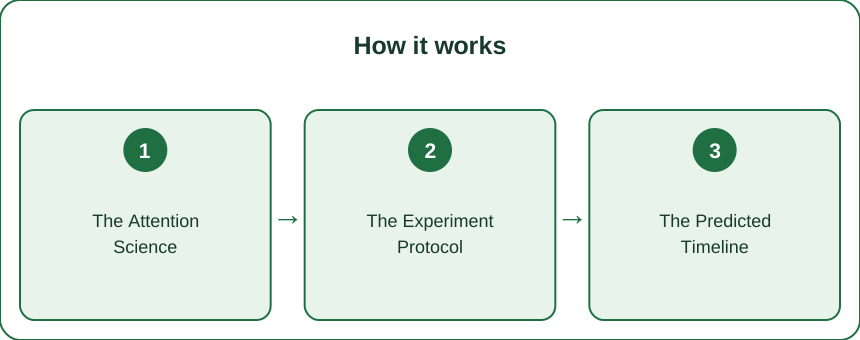
Why Does Eating in Front of a Screen Make You Eat More?
Distracted eating measurably increases intake and decreases meal memory. That second part is the interesting one.
Screen-watchers eat more and report less satisfaction — the brain that missed the meal orders a snack ninety minutes later to compensate. Reviews of distracted-eating studies have found the effect running in both directions: more consumed during the meal, and more consumed at the next meal.
The mechanism is memory. Fullness isn’t purely a stomach signal; it’s partly a record of having eaten. Attention is a satiety ingredient, and a screen consumes the attention that would otherwise write the record.
The research on this is unusually unanimous, which doesn’t happen often in nutrition.
The Experiment Protocol
Seven dinners. Screens in another room.
The stack-by-the-door ritual works well for households — everyone’s phone goes in one place before anyone sits down. The physical distance matters; a phone face-down on the table still whispers, and a notification you don’t look at still costs you attention.
Music is legal. TV isn’t, and neither is a laptop “just for the recipe.”
Conversation is optional but statistically inevitable by day three. Don’t force it — silence at a table with no screens becomes comfortable much faster than you’d think.
Two accommodations that keep this realistic: allow one household member to keep a phone if they’re genuinely on call, and put it face-up in another room where they’d hear it ring.

What Happens Day by Day?
Days 1–2: Phantom-phone awkwardness. Hands reach for something that isn’t there. Meals feel weirdly long — they’re the same length, but attention stretched them. Somebody will suggest this is stupid.
Days 3–4: Food starts tasting louder. This is the reliable turning point. People notice seasoning, texture and temperature they’d been eating past for years. Someone tells an actual story instead of a headline.
Days 5–7: The table develops a culture. Meals find their own rhythm. Most households report eating slightly more slowly and finishing slightly less, without trying.
The awkwardness was withdrawal, and it passes on schedule.
What Should You Keep Afterward?
Almost nobody keeps it at 100%, and that’s fine.
Most households land on a version: screen-free weeknights with movie-dinner Fridays, or a twenty-minute minimum before screens are allowed back. Both preserve the useful part — the first stretch of the meal, when attention actually affects intake — without turning dinner into a rule.
Purity was never the goal. The discovery is: dinner was a daily meeting of your actual life, double-booked for years. The experiment just cleared the calendar once so you could see it.
What Nobody Tells You
Eating alone is the harder case. A screen at a solo dinner is doing a genuine job — company. Substituting music, a podcast at low volume, or a magazine is a fairer swap than white-knuckling silence, and it keeps the eating attention mostly intact.
Kids adapt faster than adults. Consistently. The resistance in most households comes from the grown-ups, who then claim it came from the children.
You will notice your food is worse than you thought. Or better. Either way, attention is an honest critic, and a few people find the first genuine motivation to cook differently right here.
Twenty minutes is the number that keeps appearing. Slower meals give satiety signals time to arrive — the gut-brain communication runs on a lag of roughly that long. Screens compress meals; removing them stretches them back out naturally.
It’s a nudge, not a treatment. If your relationship with eating feels distressing, out of control, or dominated by rules and guilt, that deserves a real professional — a doctor or a registered dietitian — rather than a table experiment. Mindful eating is a useful tool, not a substitute for support.
Mini FAQ
Does this actually help with weight?
It can, modestly and indirectly, by reducing unnoticed intake and improving fullness recognition. It’s not a weight-loss protocol, and treating it as one tends to undercut the part that works — the point is noticing, not restricting.
What if my family refuses?
Start with one night a week rather than seven, and don’t announce it as a moral position. “Let’s try phones away just tonight” gets far more compliance than a household policy. Days 3–4 usually sell themselves.
Is background music cheating?
No. Music doesn’t compete for the same attentional resources that visual, narrative content does — you can hold a conversation over music and you can’t over a TV show. Keep it instrumental or familiar if you want the cleanest version.
TL;DR:
- Distracted eating increases intake and reduces satisfaction; attention is part of satiety.
- Run it for seven dinners with phones physically in another room.
- Expect awkwardness days 1–2, better-tasting food by day 3–4, real conversation by the end.
- Keep a realistic version afterward — screen-free weeknights or a 20-minute minimum.
- If eating feels distressing or out of control, talk to a doctor or dietitian rather than adding rules.
Seven screenless dinners, stacked phones, louder food, accidental conversation. The table was always broadcasting — the week just turned off the competing channel long enough to notice.
Keep Reading
This article is for general informational purposes only and is not medical advice. Always consult a qualified health professional for guidance specific to you.