Why You Always Overeat in the Car — and the 2-Minute Fix
Quick Answer: Eating while driving removes almost every sensory cue your brain uses to register fullness — sight, smell, and attention are all on the road instead of the food. Parking for 2 minutes to eat with full attention, even just once a day, usually cuts car-snacking portions significantly.
You grabbed a small bag of chips for the drive and somehow finished the whole thing without tasting more than the first three. That’s not a willpower failure — it’s what happens when eating competes with driving for your brain’s attention.

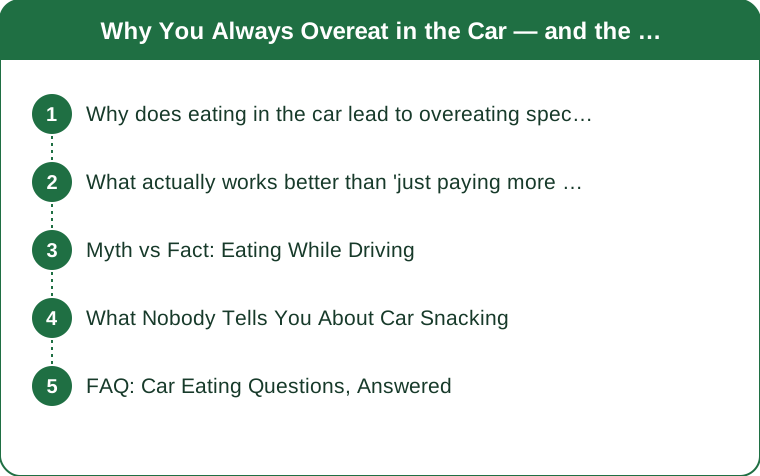
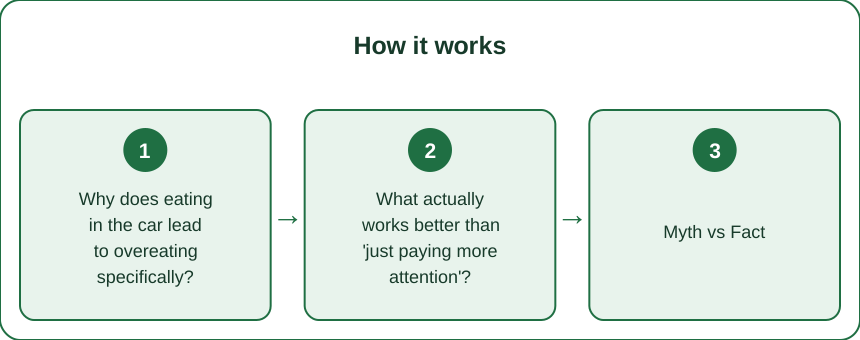
Why does eating in the car lead to overeating specifically?
Your brain registers fullness partly through visual and sensory tracking of how much you’ve eaten — watching the bag empty, seeing the plate clear. Driving occupies the visual and attentional systems that would normally do that tracking.
This is the same mechanism behind mindless eating in front of screens, just with higher stakes, since your attention has to prioritize the road over the food by necessity.
What actually works better than ‘just paying more attention’?
Pre-portion before you drive. Put your snack in a small container or napkin-wrapped portion before starting the car, so there’s a built-in stopping point instead of an open bag with no visual endpoint.
If you can, eat parked for 2 minutes first — even finishing half the portion before driving gives your brain a head start on registering the food before attention shifts to the road.

Myth vs Fact: Eating While Driving
Myth: Eating in the car doesn’t count the same as a ‘real’ meal, so portion size matters less. Fact: Calories count the same regardless of attention level — the lack of attention just makes it easier to eat more without noticing.
Myth: Healthier snacks fix the overeating problem. Fact: A healthy snack eaten without sensory tracking still gets over-consumed at the same rate as a less healthy one — the mechanism is about attention, not nutrition quality.
Myth: You’ll naturally get better at portion control in the car with practice. Fact: The attention conflict doesn’t go away with practice — pre-portioning is a structural fix, not a willpower skill you build over time.
What Nobody Tells You About Car Snacking
The problem isn’t usually what you’re eating — it’s that an open bag or box in the car has no visual stopping point, so ‘a little’ and ‘the whole thing’ feel identical in the moment. This is why pre-portioning outperforms ‘eat mindfully’ advice that assumes you have attention to spare.
A surprising number of people report that simply moving snacks to the back seat (requiring a stop to reach them) cuts their car-eating frequency almost as much as pre-portioning does — friction works even when willpower doesn’t.
FAQ: Car Eating Questions, Answered
Is it bad to eat while driving at all?
Not inherently — the issue is portion awareness, not the act itself. Pre-portioning solves most of the actual overeating risk.
What if I don’t have time to park and eat first?
Even pre-portioning without the parked pause helps significantly — the container or wrap alone gives your brain a visual endpoint.
Does this apply to drinks too, like large coffees or sodas?
Yes, to a lesser degree — but the bigger issue with drinks is usually just total volume, not attention, since there’s no natural stopping point to miss.
TL;DR:
- Driving competes with the sensory tracking your brain uses to register fullness
- Pre-portion snacks into containers before you drive instead of bringing an open bag
- A 2-minute parked head start on eating helps more than trying to ‘pay more attention’ while driving
- Moving snacks somewhere slightly less convenient (like the back seat) reduces frequency almost as much
The fix isn’t more discipline behind the wheel — it’s removing the open-ended bag that made discipline necessary in the first place.
Keep Reading
This article is for general informational purposes only and is not medical advice. Always consult a qualified health professional for guidance specific to you.