Mindful Eating and Intuitive Eating Aren't the Same Thing (Here's the Actual Difference)
Mindful eating and intuitive eating get used interchangeably so often that most people assume they’re the same approach with two different names. They’re actually built around different core skills, and knowing which is which changes which one is more useful for a specific eating challenge.

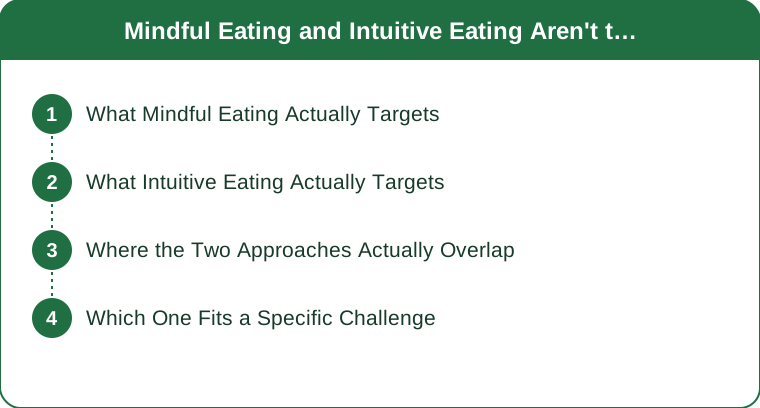
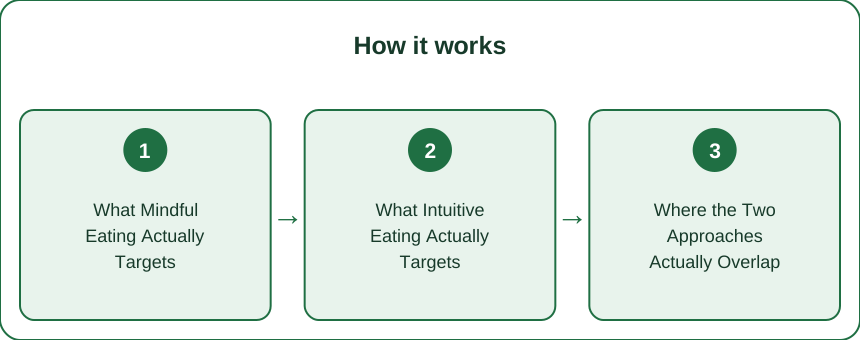
What Mindful Eating Actually Targets
The focus: the the-present-moment-attention (mindful eating centering specifically on paying full attention to the sensory experience of eating in the moment, including taste, texture, and pace, regardless of what or how much is being eaten), the the-distraction-reduction-core (a core mindful eating practice involving reducing distractions like screens during meals, since divided attention is the specific problem it’s designed to address), the the-applicable-to-any-eating-style (mindful eating techniques being layerable onto virtually any dietary approach or eating style, since it’s a practice of attention rather than a set of food rules).
What Intuitive Eating Actually Targets
The focus: the the-internal-hunger-cue-restoration (intuitive eating centering on rebuilding trust in and responsiveness to internal hunger and fullness cues, often after those cues have been dulled by dieting history), the the-anti-diet-philosophical-stance (intuitive eating including an explicit philosophical rejection of external diet rules and food moralizing, a stance mindful eating doesn’t inherently take), the the-permission-to-eat-any-food (unconditional permission to eat any food without moral judgment being a core, explicit principle of intuitive eating specifically, not just a side effect).

Where the Two Approaches Actually Overlap
The shared ground: the the-both-oppose-restrictive-rules (both approaches pushing back against rigid external food rules, though intuitive eating does so more explicitly and philosophically), the the-both-value-body-awareness (both practices valuing increased awareness of the body’s signals during eating, even though mindful eating frames this as attention and intuitive eating frames it as trust), the the-often-used-together-in-practice (many people practicing elements of both simultaneously, since attentive eating supports better recognition of the hunger and fullness cues intuitive eating is built around).
Which One Fits a Specific Challenge
The decision guide: the the-mindful-eating-for-distraction-problems (someone whose main issue is eating quickly or distractedly, regardless of diet history, generally benefiting more directly from mindful eating’s attention-focused techniques), the the-intuitive-eating-for-diet-history-problems (someone recovering from a long history of restrictive dieting and disconnection from natural hunger cues generally needing intuitive eating’s deeper cue-restoration and anti-diet framework more specifically), and the frame (mindful eating is a practice of attention that fits any eating style, while intuitive eating is a broader philosophy of rebuilding trust in hunger cues and rejecting diet rules — the right starting point depends on whether the core problem is distraction or disconnection from the body’s own signals.)
Mindful eating and intuitive eating get treated as interchangeable terms for the same general idea, but they’re built around genuinely different core skills. Mindful eating centers on paying full attention to the sensory experience of eating in the moment, taste, texture, pace, and works by reducing distractions like screens during meals, which makes it layerable onto virtually any dietary approach since it’s a practice of attention rather than a set of food rules. Intuitive eating goes further, centering on rebuilding trust in internal hunger and fullness cues often dulled by a history of dieting, and it carries an explicit philosophical stance against external diet rules and food moralizing, including unconditional permission to eat any food without judgment as a core principle rather than a side effect. The two do overlap in practice, since attentive eating supports better recognition of the very cues intuitive eating is built around, but the right starting point depends on the actual problem: mindful eating fits someone whose main issue is eating quickly or distractedly, while intuitive eating fits someone recovering more specifically from a long history of restrictive dieting and disconnection from their body’s own signals.
Keep Reading
This article is for general informational purposes only and is not medical advice. Always consult a qualified health professional for guidance specific to you.