7 Signals Your Body Sends Before You Eat Past Actually Full
Quick Answer: Fullness builds in stages long before the uncomfortable ‘too full’ feeling — from taste dulling, to eating speed slowing naturally, to a subtle satisfaction signal most people eat straight through without noticing.
Most people wait for one loud signal — feeling stuffed — to know they’ve eaten enough. That signal is actually the last of at least seven, and by then you’ve overshot the point your body was already trying to communicate.

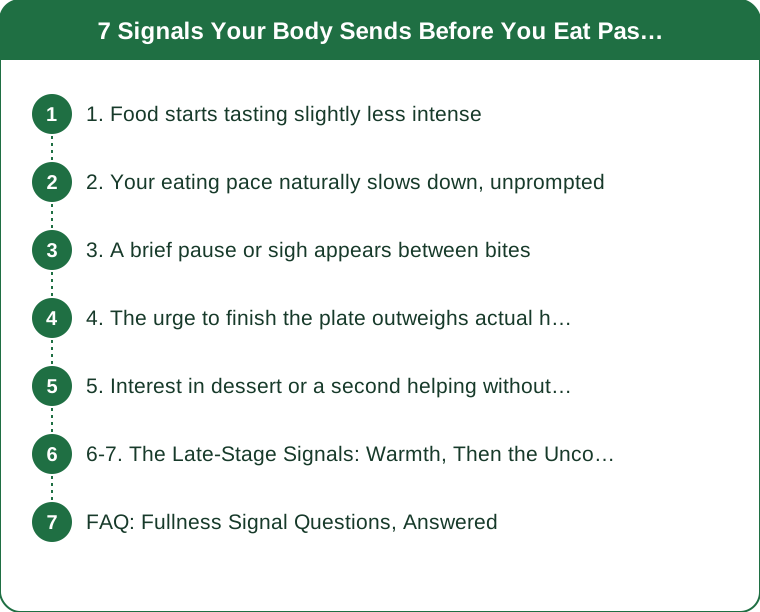
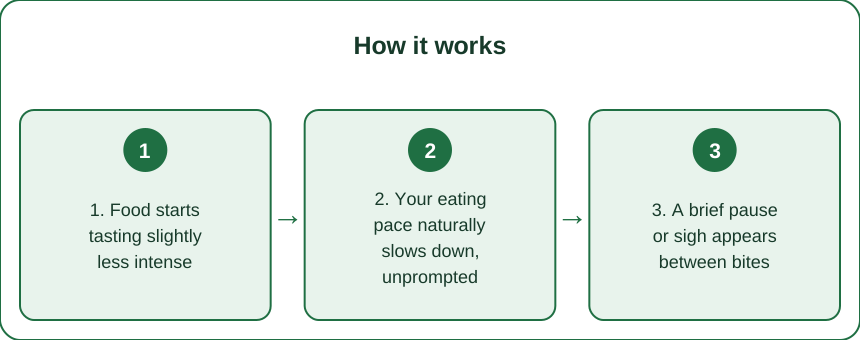
1. Food starts tasting slightly less intense
Around the meal’s midpoint for many people, flavor intensity subtly dulls — a phenomenon called sensory-specific satiety. It’s easy to eat through this because the food still tastes fine, just less vivid than the first few bites.
2. Your eating pace naturally slows down, unprompted
Without any conscious decision, chewing and bite frequency often slow measurably partway through a satisfying meal. Most people override this by talking, scrolling, or simply not noticing the pace change, and keep eating at the original speed instead of following the slowdown.
3. A brief pause or sigh appears between bites
A short natural pause — sometimes accompanied by an exhale or sitting back slightly — often shows up before the ‘stuffed’ feeling, and is one of the more reliable non-verbal fullness signals if you’re watching for it.

4. The urge to finish the plate outweighs actual hunger
This is a mental signal more than a physical one: noticing a shift from ‘I want more of this’ to ‘I should finish what’s here’ is a sign the physical hunger drive has already been satisfied and something else — habit, plate-cleaning conditioning — has taken over.
5. Interest in dessert or a second helping without real hunger
Wanting ‘something else’ rather than ‘more of this specific food’ often reflects taste-seeking rather than hunger, since sensory-specific satiety (signal #1) makes the current food less appealing while a different flavor still sounds good.
6-7. The Late-Stage Signals: Warmth, Then the Uncomfortable Full Feeling
Before actual fullness discomfort, many people report a mild warm, settled feeling — distinct from stuffed — that reflects early digestion beginning and stomach stretch receptors signaling adequate volume.
The uncomfortable ‘too full’ feeling everyone waits for comes next. By the time it hits, you’re typically well past the point where stopping would have felt comfortable — this late signal is reliable but arrives after at least 15-20 minutes’ worth of earlier cues most people eat through unnoticed.
FAQ: Fullness Signal Questions, Answered
How long does it take for fullness signals to actually register?
Hormonal satiety signals can take 15-20 minutes to fully register after eating begins, which is part of why eating slowly gives your body time to communicate before you’ve overeaten.
Why do I still feel hungry even after eating a full meal?
Eating too quickly, distraction during meals, or low protein/fiber content in the meal can all blunt how clearly these signals come through, even with adequate calories consumed.
Does mindful eating mean eating in total silence?
No — it means reducing major distractions (screens especially) enough to actually notice the physical signals, not eliminating conversation or all environmental stimulation.
TL;DR:
- Fullness builds in at least 7 stages, not one sudden signal
- Flavor dulling and natural pace slowdown are among the earliest, most-missed cues
- Wanting ‘something else’ rather than more of the same food often signals satisfaction, not hunger
- Hormonal fullness signals take 15-20 minutes to register — eating slower gives them time to catch up
This is general wellness information, not medical advice for eating disorders — persistent disordered eating patterns deserve professional support.
Keep Reading
This article is for general informational purposes only and is not medical advice. Always consult a qualified health professional for guidance specific to you.