7 Reasons You Eat Differently When You Are the One Cooking
Quick Answer: Cooking involves repeated tasting, extended food exposure, and serving decisions made while already hungry - a combination that adds an estimated 200 to 400 calories for many home cooks without any of it being counted as a meal. The fixes are structural: taste with a designated spoon into a small dish, eat something before you start, and serve your own plate first rather than last.
You sat down having eaten nothing all evening, ate a normal dinner, and still went to bed feeling like you had overdone it.
You had eaten. It just did not happen at the table, so it did not register anywhere.

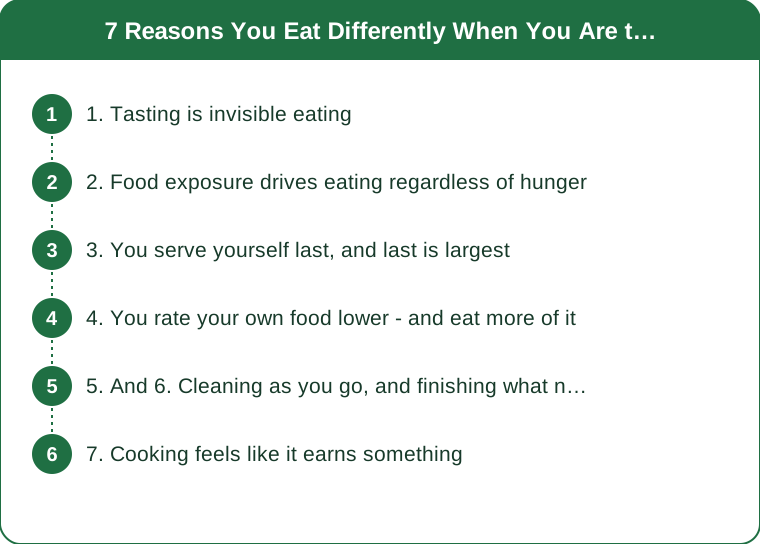
1. Tasting is invisible eating
Six to ten tastes across a meal preparation is completely normal, and each one is a genuine mouthful. Across a full dinner that adds up to something between a snack and a small meal, and none of it feels like eating because it happened standing up with a spoon.
Episodic memory needs a discrete event to encode. A tasting spoon is not an event - it has no beginning, no plate, and no end - so it does not get stored the way a meal does and does not contribute to your sense of having eaten.
The fix: one designated tasting spoon and a small dish. Pour a little into the dish, taste from there, and put the spoon in the sink after each use. Both actions make the tasting visible to you without stopping you from doing it.
Does this really add up to much?
On a substantial cooked meal it commonly runs into the low hundreds of calories, and more when the food is calorie-dense - cheese sauces, oils, batters, and anything you taste while adjusting seasoning.
2. Food exposure drives eating regardless of hunger
Time near food increases intake. This is one of the more reliable findings in eating behavior research: proximity and visibility of food raise consumption independently of appetite, and a cook spends 30 to 60 minutes in continuous close contact with it.
Smell primes the whole system. Cooking aromas trigger cephalic phase responses - saliva, gastric acid, insulin - which is your body preparing for food and, functionally, generating appetite before the meal exists.
By the time you sit down you have been hungry for longer and more intensely than anyone else at the table, which shapes both how much you serve and how fast you eat.
What actually helps here?
Eating something small with protein before you start cooking - yogurt, a boiled egg, a handful of nuts. It sounds counterintuitive and it consistently reduces both grazing and the size of the eventual portion.
3. You serve yourself last, and last is largest
Serving yourself last usually means serving yourself whatever is left, and pots are routinely made with more than the table needs. The remainder lands on the cook’s plate by default rather than by decision.
It also means serving at your hungriest, after the exposure described above, which is the worst possible moment to be estimating a portion.
And there is a real reluctance to leave food in the pot, particularly food you made, which converts leftovers into a serving rather than into tomorrow’s lunch.
The fix: plate your own portion first, then serve everyone else, then put leftovers into a container before you sit down rather than after. Both changes take under a minute and remove the default entirely.
Is portioning first not a bit rigid?
It takes one extra step and removes the two worst decisions of the evening. You can always go back for more - the point is that it becomes a decision rather than an accident.

4. You rate your own food lower - and eat more of it
Cooks consistently rate their own cooking less favorably than the people eating it do, partly because they have been smelling it for an hour and partly because they know every compromise that went into it.
Reduced perceived enjoyment tends to increase intake, since satisfaction is one of the signals that contributes to feeling finished. Food you find only moderately good is oddly easy to keep eating.
Sensory-specific satiety also runs ahead of the meal. Extended smell exposure produces some habituation to the aroma, which means the meal delivers less novelty at the moment you finally eat it.
How do you get around that?
Leave the kitchen for five minutes before eating, and sit somewhere the cooking smell is not. It resets enough of the sensory picture to noticeably change how the first few bites land.
5. And 6. Cleaning as you go, and finishing what nobody claimed
5. Cleaning up is a second eating opportunity
The last two spoonfuls in the pot, the corner of something on the serving dish, the piece stuck to the pan. It is a well-recognized pattern and it happens after you have already eaten a full meal, which places it entirely outside any sense of the day’s intake.
The practical fix is to package leftovers into containers immediately, before you sit down. What is in a sealed container in the fridge is not available during cleanup, and that single sequencing change removes most of it.
6. You finish other people’s plates
Particularly with children, and particularly with food you cooked. There is a genuine reluctance to discard effort, and a half-eaten portion registers as waste rather than as food you are choosing to eat.
Scrape into the bin or into a container immediately. Deciding in advance - before the plates come back - is far easier than deciding while holding a fork over something you made.
7. Cooking feels like it earns something
Effort creates an implicit sense of entitlement, and forty minutes of standing over a stove reads as work in a way that opening a package does not. That framing quietly licenses a larger portion, a second glass, or dessert.
Physically it is a modest activity - standing and light movement, in the region of 100 to 150 calories an hour - which is considerably less than the tasting alone often adds.
The framing is worth noticing rather than fighting. Cooking your own food is genuinely valuable for what you eat over a year, and the entitlement effect just needs to be uncoupled from portion size.
So what is the whole fix, in order?
Eat something small with protein before you start. Use a tasting spoon and a small dish. Plate your own portion first. Container the leftovers before you sit down. Leave the kitchen for five minutes before eating. Five changes, none of which requires eating less at the actual meal.
TL;DR:
- Tasting is genuine eating that never gets encoded as a meal, commonly adding a few hundred calories across one dinner.
- Extended food exposure and cooking smells generate appetite before the meal exists, so the cook sits down hungriest.
- Serving yourself last means serving whatever is left, at the worst possible moment for judging a portion.
- Cleanup and finishing other people’s plates are two more eating events that sit outside any sense of the meal.
- The fixes are structural: eat first, taste into a small dish, plate yourself first, container leftovers before sitting, and leave the kitchen for five minutes.
None of this requires eating less at dinner. It only requires that the eating you already do becomes visible to you.
Keep Reading
This article is for general informational purposes only and is not medical advice. Always consult a qualified health professional for guidance specific to you.