7 Mindful Eating Mistakes That Are Quietly Undoing Your Progress
Quick Answer: The most common mindful eating mistakes are treating it as a diet rule rather than an awareness practice, eating slowly but still distracted by screens, ignoring genuine hunger cues in favor of rigid meal timing, judging food choices morally, and giving up after one ‘failed’ attempt — each one undermines the actual point, which is attentive awareness, not perfect execution.
Mindful eating gets attempted a lot and abandoned almost as often, usually because of a few specific, fixable missteps rather than the practice itself failing.

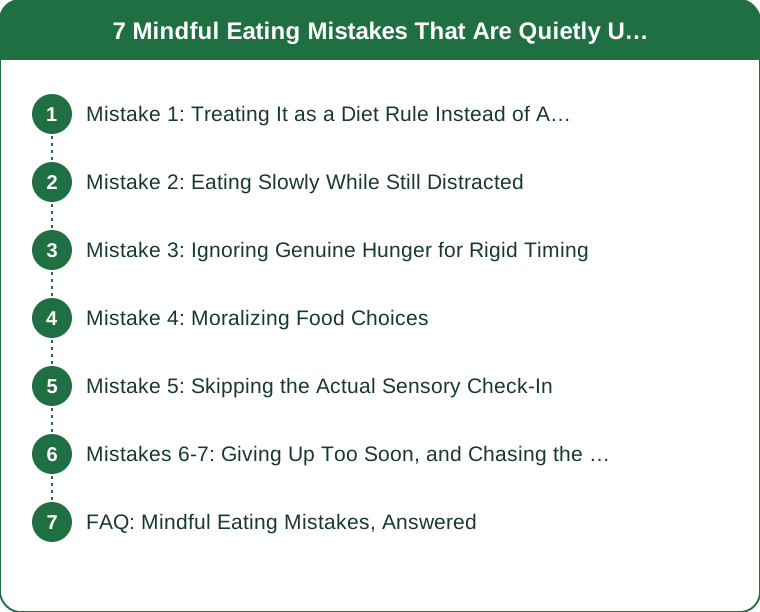
Mistake 1: Treating It as a Diet Rule Instead of Awareness
Many people approach mindful eating as another restrictive rule set — chew a certain number of times, eat only at certain times — rather than genuine attentiveness to hunger, fullness, and satisfaction. This turns a flexible awareness practice into just another rigid diet, missing the actual point entirely.
Mistake 2: Eating Slowly While Still Distracted
Slowing down while scrolling a phone or watching TV doesn’t produce the awareness benefits mindful eating is meant to provide — the pace changes but the distraction that blocks genuine hunger and fullness signals doesn’t. True mindful eating requires removing distractions, not just eating at a slower speed.
Mistake 3: Ignoring Genuine Hunger for Rigid Timing
Sticking to a strict eating schedule regardless of actual hunger signals works against the core premise of mindful eating, which is responding to your body’s real cues rather than an external clock. Genuine hunger arriving earlier or later than a planned mealtime is information worth listening to, not overriding.

Mistake 4: Moralizing Food Choices
Labeling foods as ‘good’ or ‘bad’ while attempting to eat mindfully reintroduces the guilt and restriction mindful eating is specifically meant to move away from. Neutral, curious awareness of how a food actually makes you feel works better than moral judgment about the food itself.
Mistake 5: Skipping the Actual Sensory Check-In
Mindful eating’s core mechanism is noticing taste, texture, and satisfaction in real time — skipping this and just eating slower without genuine sensory attention misses most of the actual benefit. A few genuine, attentive bites matter more than an entire meal eaten slowly but on autopilot.
Mistakes 6-7: Giving Up Too Soon, and Chasing the Wrong Success Marker
Mistake 6: Giving up after one ‘failed’ meal
Eating a meal quickly or distractedly once doesn’t mean the practice failed — mindful eating is a skill built through repetition, not a single perfect performance. Treating one off day as proof it ‘doesn’t work’ is a common reason people abandon it prematurely.
Mistake 7: Expecting immediate weight change as the only success marker
Mindful eating’s primary, well-supported benefits are improved awareness of hunger and fullness and reduced binge-eating tendencies — weight change, if it happens, is typically a secondary, gradual effect. Judging the practice solely by the scale in the first few weeks misses what it’s actually good at.
FAQ: Mindful Eating Mistakes, Answered
How long does it take to actually notice mindful eating benefits?
Most people notice improved hunger and fullness awareness within a few weeks of consistent, distraction-free practice, well before any weight changes.
Do I need to practice this at every single meal to see benefits?
No — even one genuinely distraction-free, attentive meal a day builds the underlying skill meaningfully over time.
Is mindful eating meant to replace nutrition knowledge entirely?
No — it works best alongside general nutrition awareness, not as a replacement for understanding what foods support your specific goals.
TL;DR:
- Mindful eating is an awareness practice, not another rigid diet rule set
- Removing distractions matters more than simply eating slower
- Genuine hunger cues should guide timing more than a fixed external schedule
- One imperfect meal doesn’t mean the practice failed — it’s a skill built over repetition
The goal was never a perfect meal every time — it’s building the habit of actually noticing what’s happening while you eat.
Keep Reading
This article is for general informational purposes only and is not medical advice. Always consult a qualified health professional for guidance specific to you.